





“I’m a psychotherapist, but my interest in mental health also comes from lived experience. I know what it can feel like to need support while also navigating systems that don’t always understand the cultural, family and community context you come from. I also know what it feels like to constantly advocate for people in training and professional spaces who might not understand wellbeing in their mother tongue, spreading awareness of cross-cultural differences.
Growing up across different countries and cultures made me aware quite early that the way we understand distress, trauma, healing and even the language we use for mental health can be very different.
Within Somali communities, conversations around mental health can sometimes be difficult, but I don’t think the answer is simply to label our communities as ‘stigmatising’. There are deeper questions about language, trust, faith, migration, intergenerational experiences, trauma and whether services themselves feel safe or relevant.
That curiosity is part of what led me to study psychotherapy, specialising in children and young people. I’m deeply interested in the modern challenges to mental health that can come with growing up bicultural – navigating different identities, expectations, values and ways of understanding wellbeing. I wanted to help build the spaces I felt were missing: where professional knowledge and community knowledge could meet; where the experiences and issues that are often overlooked, misunderstood or considered too uncomfortable to explore are welcomed into the conversation; and where people with lived experience have a meaningful role in shaping what good mental health support actually looks like.
Mental health looks different across cultures
Even during my psychotherapy training, I often felt excluded. I was the only Somali and Black person on my course, and much of what we were taught about mental health felt rooted in a Western understanding of distress and recovery. I kept finding myself asking questions that didn’t seem to have enough space in the room: What about culture? What about intergenerational wounds? What happens when your grandparents fled war and carried fear, survival and loss that was never named as trauma? And how does that shape the generations that come after them?
As a British Somali woman, I also understand what it means to hold two cultures at once. At times, those cultures can clash, leaving you feeling as though you do not fully belong in either. It took me time to realise that I didn’t have to choose between them, I deserved to belong to both.
That experience became part of the reason I founded the Somali Mental Health Network: to create space for the conversations that are often missing, and to make sure culture, identity, migration, faith and lived experience are not treated as side notes in mental health, but as part of how we understand people in the first place.
We’re translating mental health into something people understand
The Somali Mental Health Network is still very new. We started in Sheffield, but we’re now around 200 mental health professionals across the UK. We’re working with organisations including the NHS, offering training and bringing a different cultural lens to the support that they give.
We also run retreats and peer support spaces for Somali and East African mental health professionals who feel alone in both worlds and are often isolated. We translate mental health clinical knowledge into ways communities can understand, especially the Somali community.
We run activities like balloon-popping workshops to describe anxiety. I’ve seen mothers come into our workshops not knowing what anxiety means, then leave having real conversations with their daughters. They can finally understand what’s happening in their bodies and minds.
Nobody should feel alone because of where they’re from
The Somali Mental Health Network is still growing. We started in Sheffield and have now built a network of around 200 mental health professionals across the UK. We work with organisations including the NHS, offering training, consultation and a culturally informed lens on how mental health support is understood and delivered.
We also create peer spaces for Somali professionals who can sometimes feel caught between professional systems and their own communities. A big part of our work is translating clinical mental health knowledge into language, examples and conversations that actually make sense in people’s everyday lives.
Sometimes that means moving away from jargon completely. We’ve used activities like balloon-popping exercises to help explain what anxiety can feel like in the body. I’ve seen mothers come into a workshop not really knowing what anxiety means, then leave able to recognise it, name it and have a completely different conversation with their daughters.
For me, that is what translation means. It is not just changing words from English into Somali. It is helping people connect clinical knowledge to their bodies, families, faith, culture and lived experience so that mental health becomes something they can actually understand and talk about.
We need to stop people reaching crisis point
We know there are serious inequalities in who is able to access mental health support early and who is first encountered by services when they are already in crisis. Black communities are disproportionately represented in some of the most restrictive parts of the mental health system, and local findings in Sheffield have also drawn attention to the representation of Somali people within crisis and secondary mental health services.
That raises an important question for us: what is happening before people reach that point?
When it comes specifically to Somali communities, there are still significant gaps in what we know about access to early intervention, prevention and talking therapies – including who is using those services, who is not reaching them, and why.
For me, the question is: how do we reach people before a crisis becomes the first point of meaningful support?
Part of that is making mental health knowledge available much earlier, through community spaces, schools, faith organisations and trusted networks. People shouldn’t have to reach a psychiatric ward, study psychology or be able to afford therapy just to understand anxiety, trauma, depression or what is happening in their own body.
You should be able to walk into your local community hub and learn about your mental health in a way that makes sense to you.
That is what prevention should look like.
On the programme, I hope to learn how to yap with structure
Even though I speak English confidently, I can still feel insecure about the way I communicate, especially in public spaces as a young emerging leader. Although I do get feedback for being confident, some of what I discuss is linked to lived experience and so to keep that professional hat on at all times, is often a challenge. I want to become more intentional in how I tell stories, explain complex ideas and speak with influence.
I also want to move away from feeling like I have to disclose my own lived experience every time I speak about mental health. My story matters, but I want to be able to stand confidently in my professional knowledge too, and share the beauty, complexity and impact of this work without always having to personally expose myself in order for people to listen.
I’m looking forward to the journey ahead, but I know this work was never meant to be carried by one person. The Somali Mental Health Network is being shaped by the professionals, communities, partners and people with lived experience who believe mental health support can be more culturally responsive, preventative and rooted in the realities of our communities.
That is what gives me hope, seeing people move with the mission, contribute their knowledge and help build something that belongs to all of us.
If this work speaks to you, follow the Somali Mental Health Network, join the network and be part of what we’re building next.
www.somalimentalhealthnetwork.org
Together we heal, together we grow.
About the Author
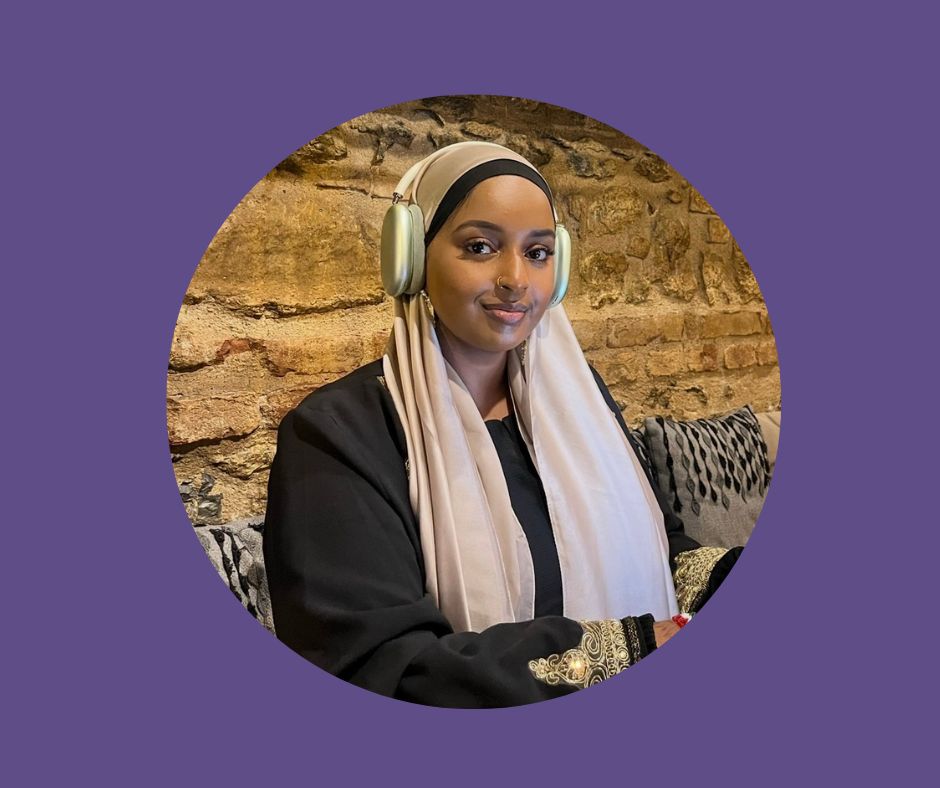
Salma Mohamed is a Somali integrative psychotherapist, community educator, mental health activist, and wellbeing leader based in Sheffield, whose work focuses on mental health inequalities faced by war-torn communities and on prevention. She is also the founder of The Somali Mental Health Network.